“I don’t know anything about websites. What’s the difference between a $1,000 website and a $10,000 website?”
This is the most common question we hear at Digital Renegades. And it’s a really valid question. When you look at websites online, they all kind of look the same. So why pay ten times more for one over another?
The answer is simple. Your website functions either as a digital business card or as a growth engine for your company. That determines what you should spend.
As the owner of Digital Renegades with 8+ years and 200+ websites under our belt, I’ve had this conversation hundreds of times. Here’s what I tell every client who asks.
Why Website Budget Conversations Are Hard
You can’t talk about budget without understanding value first.
Most business owners don’t know what value they’ll receive for any given number. Everyone wants maximum value per dollar. That’s just smart business.
The real question is: “What does your website need to accomplish for your business?”
Some clients come to us with a clear vision and budget mapped out. Others don’t know what they need until we show them what’s possible. Both approaches work.
As Steve Jobs said, “A lot of times, people don’t know what they want until you show it to them.” Our job is to understand your business goals first, then recommend the solution that makes sense, even if that means recommending you start with Wix instead of hiring us.
The $1,000 Website: What You Get
Let’s be clear about what a $1,000 website is. At this price point, you get:
Template-Based Foundation
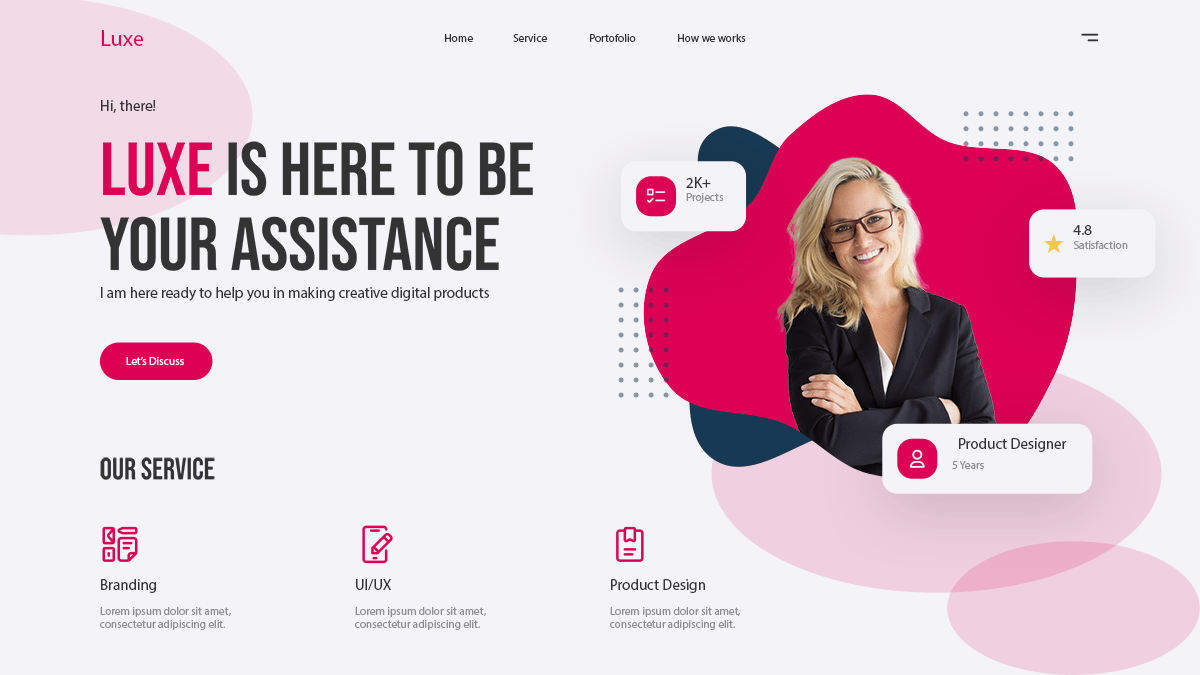
Your site will be built using pre-existing WordPress themes or page builder templates. Customization is limited (typically just colors, your logo, and maybe font choices). Production is fast (days, not weeks), but the appearance will be generic.
Stock Assets and Basic Features
- Generic stock photos (or worse, potential copyright issues if licensing isn’t handled properly)
- Basic contact forms like Contact Form 7 (no tracking, no submission history)
- No CRM integration
- Likely no SEO strategy
- No schema markup or technical development
- Basic pages only: Home, About, Services, Contact
Who This Is For
Here’s the honest truth: If you just need a website and don’t need it to do anything, buy the $1,000 site. If you want it to be part of your business, don’t do that.
A $1,000 website works if you’re thinking of it as a digital business card. You need online legitimacy. You need something to send people to when they ask for your website. But you’re not depending on it to grow your business.
The Hidden Costs
Here’s what most people don’t realize about budget websites:
- 98% of DIY website attempts fail to publish at all
- Copyright risks on photos can come back months or years later
- No maintenance plan equals security vulnerabilities (26% of critical WordPress vulnerabilities never receive a patch), leaving sites permanently exposed
- No support when things break
Here’s the real test: Can you afford for your website to be offline for two days?
If the answer is yes, you probably don’t have complex needs. If the answer is no (if losing your website for two days would cost you real money, leads, clients, or reputation), then you need more than a $1,000 solution.
Consider this: 88% of online consumers won’t return to a website after a bad experience. A cheap website can actively damage your business by sending potential customers to your competitors.
Hiring a professional web development company often saves money when you factor in time, expertise, and avoiding costly mistakes.
The $10,000 Website: Strategic Digital Infrastructure
When you invest $10,000 or more in a website, you get strategic digital infrastructure built for your business.
Custom Design and Development
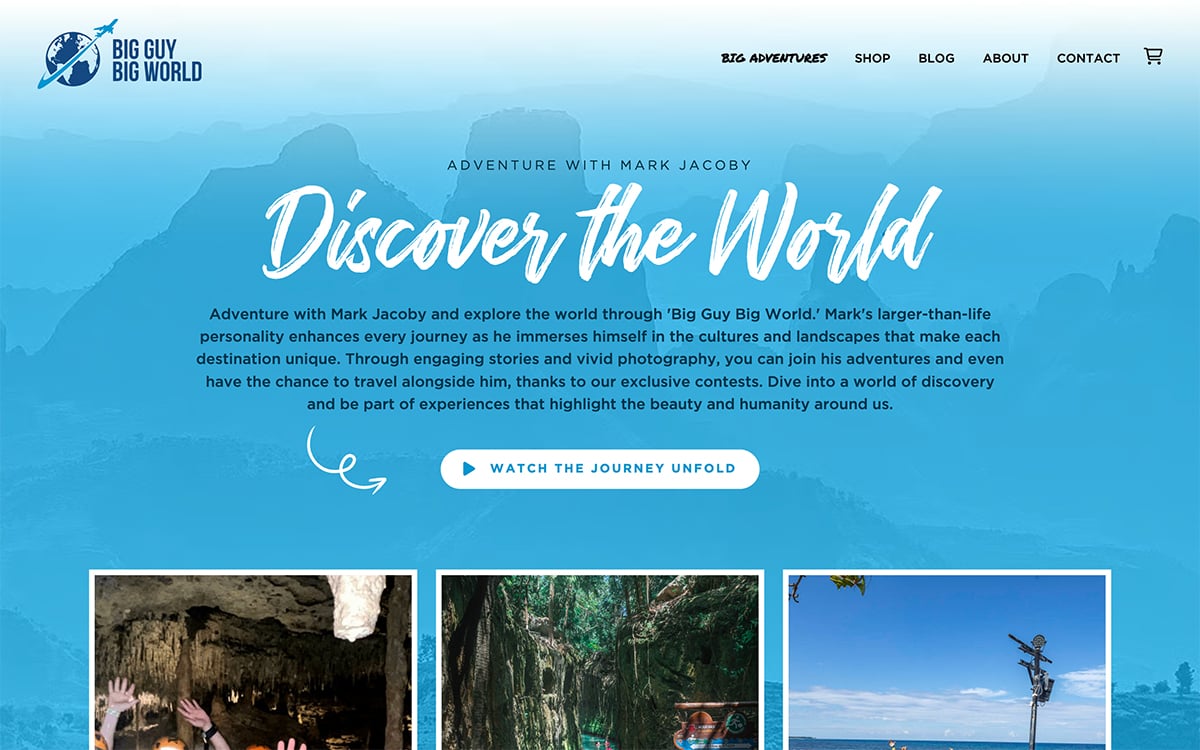
Everything is built for your business and goals. There are no template limitations. The design is mobile-first and fully responsive. Your brand expression is unique. Custom modules and functionality are developed for your needs.
Professional Assets and Technical Foundation Offers:
- Legally licensed professional photography OR a custom photoshoot
- Professional contact forms with complete tracking and CRM integration
- Your leads go somewhere useful and get followed up on
- Complete SEO foundation:
- Schema markup (helps Google understand your content)
- Page speed improvements
- Mobile tuning
- Properly structured meta descriptions and title tags
- Correct header hierarchy
- Image compression
- Following Google’s search quality guidelines
- Full analytics and conversion tracking setup
- Enterprise-level security infrastructure
Strategic Consulting Included
You’re not just getting technical work. You’re getting strategy developed from building 200+ websites across multiple industries.
We help you build:
- Lead funnel design
- Conversion improvements
- User experience (UX) strategy
- Strategic call-to-action placement
- Complete customer journey mapping
Our approach to increasing ROI through bespoke web services focuses on creating custom solutions that align with your business goals rather than forcing your needs into template limitations.
Research shows that UI improvements can increase conversion rates by up to 200%, and UX refinement can yield conversion lifts of up to 400%. These aren’t small numbers. On a website generating real business, that’s the difference between growth and stagnation.
Quality of Service and Partnership
When you invest in a premium website, you’re not just another transaction. You get:
- Dedicated attention throughout the entire process
- An ongoing relationship, not a one-time project
- Someone who actually answers when things go wrong
- Website Care Plans with guaranteed response times
Compare that to a $1,000 provider who’s trying to pump out as many sites as possible. Who do you think is going to be there when you need help?
Think of it this way: If you’re a lawnmowing company, you’re not going to take on a yard for $10 because they have four square feet of grass. It just doesn’t make sense for the business. The same applies to us. We’ve learned what we’re good at building, and we focus there.
When Your Market Demands More
Think about your market for a second. Who’s your customer? If you’re competing in a luxury market, you need more design polish. It’s really difficult to be in a luxury market and look like garbage. There’s an expectation of quality that your competitors will have.

Here’s how I explain it: You have a Rolls-Royce, the pinnacle of luxury cars, right? And you pull up next to it in a 1990 Hyundai. Now imagine the Hyundai driver says, “I got luxury cars. Want to go for a ride and see more?” And the Rolls-Royce driver says, “I’ve got luxury cars too. Want to come with me and I’ll show you?”
What car are you getting in to go see more luxury cars? The guy who rolled up in a pile of junk or the guy who rolled up with what you’re looking for?
Your website works the same way.
Say you run a med spa. Your physical location is beautiful (elegant, luxurious, carefully designed). Clients walk in and feel like they’re in good hands. Then someone looks you up online first and finds what looks like a basic website thrown together in an afternoon. What happens to that trust?
You need consistency. They go to your website (nice, pretty, feels luxurious). They go into the med spa (nice, pretty, luxurious). You can demand premium pricing by doing that. You also create a consistent experience.
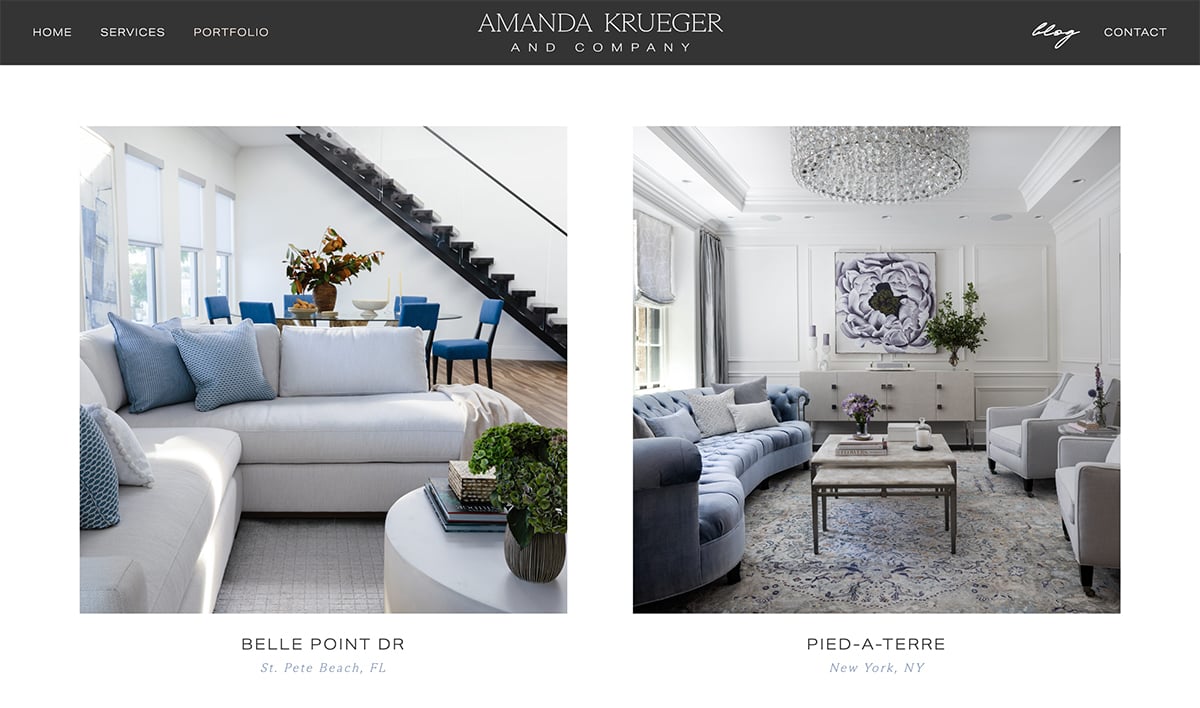
Our work with AK&CO demonstrates this. Amanda Krueger runs a high-end interior design firm with locations in Florida and Connecticut. She came to us with detailed design mock-ups because she understood exactly what her luxury clientele expected. Her website needed to reflect the same level of sophistication and attention to detail as her interior design work. We collaborated to translate her design vision into a web experience that matched the premium quality of her projects.
The statistics back this up:
- 94% of first impressions are design-related (people judge your business in milliseconds)
- 75% of consumers judge company credibility by website design
- 61% of users won’t return to difficult mobile sites, and 40% will visit a competitor instead
Industry Expectations Vary
The level of investment depends on your industry and who your customer is:
- Med spas, luxury services: Need elegant, content-heavy, SEO-refined sites. Your competition is doing this. If you’re not, you’re falling behind.
- Concrete companies, contractors: Need functional, straightforward, credible sites. Not trying to be fancy, just trustworthy. If you’re pouring concrete, you don’t necessarily need the fanciest website with full animations and all that. You need functional.
- Real estate: Listings, lead capture, professional polish. People are making six-figure decisions based on your site.
- Professional services (lawyers, consultants, accountants): Authority, trust signals, case studies. Your website needs to demonstrate expertise.
Before you decide on investment level, research 5-10 competitors in your market. What do their websites look like? That’s your baseline. You can be slightly better or slightly worse, but you can’t be in a completely different category without it affecting perception.
The Three Questions You Must Ask
Question 1: What Must Your Website Accomplish?
Be clear. Write this down:
- Is it a lead generation machine? (If so, how many leads per month do you need?)
- E-commerce sales? (What’s your average order value? Conversion rate goals?)
- Information and credibility only?
- Booking and scheduling?
- Portfolio showcase?
Your answers here will guide everything else.
Question 2: Can You Afford for It to Be Offline?
Here’s a really good question we often ask during our process: Can you afford to have your website down for two days?
If the answer is yes, you probably don’t have complex needs. If the answer is no, you have more complex needs and you should not do a basic website.
This is the simplest way to determine if you need professional infrastructure or if a basic solution works fine.
Question 3: What’s Your Time Worth?
The statistics are eye-opening:
- Business owners spend 120-160+ hours on DIY website projects
- Professional agencies complete the same project in 60-80 hours
- 40% of employee time gets wasted on administrative tasks that could be automated
- A 10-person company wastes approximately $200,000 annually on manual admin tasks
Do the math: (Your hourly rate) times (wasted hours) equals the true cost of doing it yourself.
Usually, the $10,000 website is actually cheaper than the $1,000 solution when you factor in opportunity cost. According to research from Forrester, quality UX design delivers an average ROI of 9,900%, with businesses typically seeing returns within 6-12 months through improved conversions and reduced maintenance costs.
Once you’ve determined your budget range, review our guide on the 5 critical questions to ask when hiring a web designer. Price is just one factor in choosing the right partner.
Common Misconceptions About Website Pricing
Misconception 1: Any Website Is Better Than None
False.
Bad websites actively damage your credibility. 75% of people judge company credibility by website design, and 88% of online consumers won’t return after a bad experience.
It’s better to have no website than one that sends customers running to your competition.
Misconception 2: I Can Always Upgrade Later
This creates organizational debt. You end up needing complete rebuilds every 1-2 years instead of building it right once. This means:
- Content migration nightmares
- Lost SEO equity (all that ranking you built gets reset)
- More expensive than doing it right initially
- Constant cycle of paying for new sites
Misconception 3: DIY Saves Money
Reality check:
- 98% of DIY attempts fail to publish
- Your time investment often exceeds the cost of hiring professionals
- No maintenance plan means security risks
- Common mistake installing three caching plugins and four SEO plugins
Sometimes you’ll have people who’ve tried to do it themselves. They bought it from someone. They’ve gone in and you’ll find things like three caching plugins and four SEO plugins because they think every additional one you install makes it better. Really what they’ve done is inadvertently cause serious damage to their site. They’ve created a bunch of database junk. The plugins are all overriding each other.
As we discussed in our analysis of why professional web development saves money, DIY attempts that fail cost far more than the initial investment.
When Budget-Friendly Solutions Make Sense
Here’s something you won’t hear from most agencies: Sometimes Wix or Squarespace is the right answer.
We recommend platforms like Wix or Squarespace when:
- Your budget is genuinely under $2,000-$3,000
- You have very simple needs
- You’re comfortable with DIY tech
- Your website isn’t critical to your business operations
- You need a starting point before you scale
Why would an agency turn down work?
Look, like many freelancers and agencies, we’ve done the $1,000 websites for clients. The problem is at the time, we overdelivered and actually didn’t deliver a $1,000 website. We delivered a $4,000-$6,000 website at our own detriment of time and energy. Over time, we realized we couldn’t do that anymore and needed to charge the right budget to help our clients long-term.
We’d rather send you to the right solution (even if it’s not us) than take your money and deliver something we know won’t work for your needs.
What a Website Actually Does
People often misunderstand what a website provides.
Imagine your buying a car and saying, “Now I’m going to be able to see all of America.” Just because you bought the car, and have the car doesn’t mean you’ve seen all of America. You still have to plan your trip. Fill it with gas. Actually drive it. Maintain it along the way.
A website works exactly the same way. It’s a tool and vehicle to your next destination.
A website (whether $1,000 or $10,000) gives you:
- Legitimacy and trust
- Control over your client experience (vs. relying on social media platforms)
- The ability to capture leads 24/7
- A showcase for your work and services
- Infrastructure to support your marketing efforts
But your website doesn’t automatically:
- Generate traffic
- Replace your sales process
- Make poor service look good
- Guarantee business growth
You still have to run your business. You still need a marketing strategy. You still have to drive traffic. The website is the vehicle that gets you there faster than walking, but you still need to get in and drive. Your business still needs to do the work. Work like how to turn your web traffic into increased sales through strategic conversion improvements and user experience design.
The website enables your success. It doesn’t guarantee it.
Making the Decision
Step 1: Define Your Goals
Write down what you need your website to do:
- Generate X leads per month?
- Process online sales?
- Book appointments automatically?
- Establish authority in your field?
Step 2: Research Your Market
- Look at 5-10 competitors
- What’s the standard in your industry?
- Are you competing on luxury or value?
- What do customers expect to see?
Step 3: Calculate Your True Cost
Include everything:
- Time investment (your hourly rate times hours spent)
- Opportunity cost (what else could you be doing?)
- Maintenance and security ongoing
- Potential revenue impact
- Cost of being offline or having a poor site
Step 4: Match Investment to Reality
- Don’t buy premium expecting magic
- Don’t buy budget expecting growth
- Be honest about needs vs. wants
- Consider a phased approach if budget is genuinely tight
Quick Decision Matrix
| If Your Website | Recommended Investment |
| Is just online presence | $1K or DIY platform |
| Generates leads for sales | $10K+ custom solution |
| IS your business (e-commerce) | $20K-$50K+ |
| Requires custom functionality | $50K-$120K+ or a web app |
The Real Answer
The difference between a $1,000 and $10,000 website isn’t about features or page count. Your website functions either as a digital business card or a growth engine for your business.
Here’s what you get at each level:
- A $1K website gives you template plus stock photos plus basic features, which equals online presence.
- A $10K website gives you custom design plus strategy plus ongoing partnership, which equals a business tool.
Your market will often dictate the minimum investment that makes sense.
A luxury service provider with a budget website loses deals to competitors with professional sites not because the work quality is different, but because the first impression never happens.
Can you afford to be offline? That’s often the critical decision point. And here’s the truth about DIY: It’s not always cheaper when you calculate your time correctly.
Our average project runs between $6,000-$50,000.
But here’s what makes us different: We’ll tell you if we’re not the right fit. If your needs are simple and your budget is tight, we’ll recommend starting with Wix or Squarespace. If you need something we can’t deliver, we’ll say so upfront.
We care about solving your problem, not just making a sale.
Sometimes that means turning down projects. Sometimes it means building something that costs more than you originally budgeted, but that’s because we show you the ROI you’ll get from doing it right.
We’ve built 200+ websites across industries. We know what works.
Work With a Team That Gets It Right
We’ve learned what we’re good at building. We’re focused on the details and we can’t help ourselves with that level of perfectionism. We charge rates that match the product we know how to build and match with clients whose business need that level of quality. That experience means we can spot problems early, recommend solutions that work, and build something that grows with your business instead of limiting it.
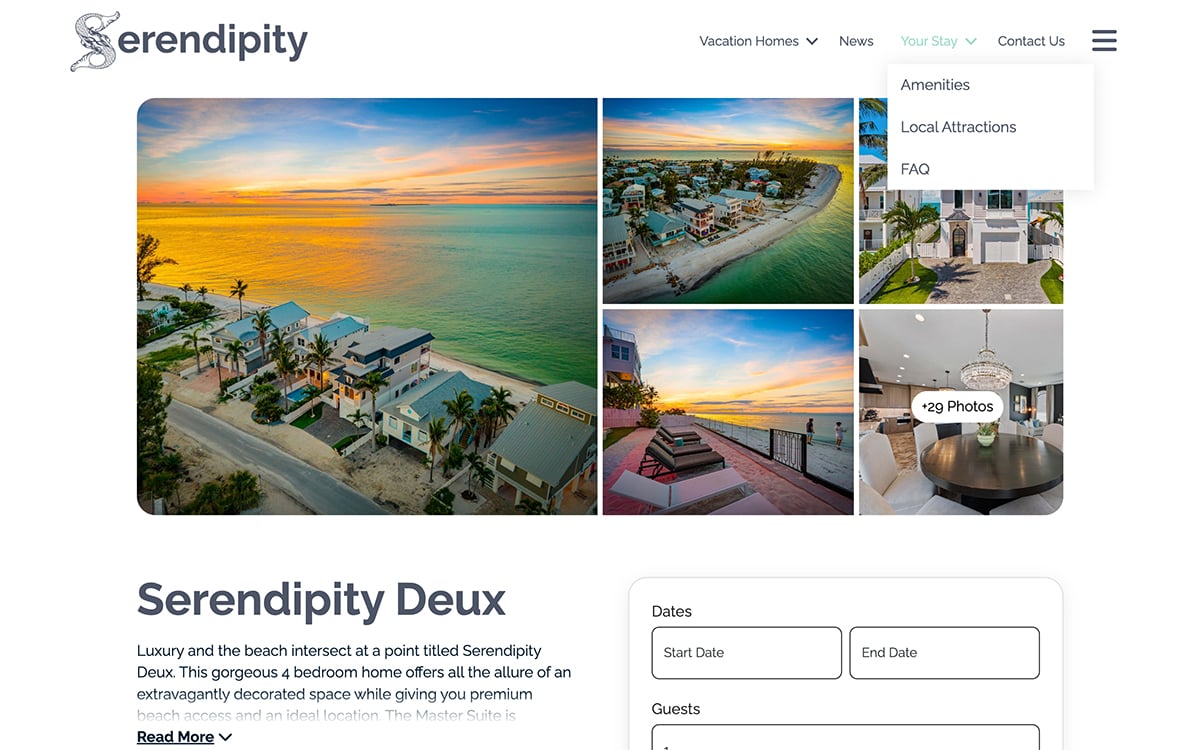
When we developed Serendipity’s luxury vacation rental website, the strategic combination of custom design and integrated booking systems helped them scale from one property to managing 13 high-end rentals.
We follow a structured 7-phase website development process so every project milestone is met with precision. Whether crafting your digital space or creating a marketing plan, we’re the type of partner focused on higher success rate and greater ROI.
Not sure what level of investment makes sense for your business?
Schedule a free consultation with our team. We’ll give you an honest assessment of what you need even if that means recommending you take another direction than hiring us because at the end of the day, we’re not here to sell websites. We’re here to help businesses grow.
If you’re considering paid advertising to drive traffic to your new website, read our analysis of whether Google Ads are worth the investment.




Schedule a Call
Not sure if Digital Renegades is the right fit for your project? Schedule a consultation with our team and we'll help.